
Clear identity page with the validity period required by the university.
ECAP Guide · 2027 File
Documents Required to Study in China for Moroccan Students in 2027
A practical application-file checklist covering passport, diplomas, transcripts, translations, language proof, medical examination and extra documents for graduate study and scholarships.
Last reviewed: October 2026 · This guide uses official admission references, but the final checklist always depends on your university, program and scholarship.

There is no single document list for every universityDegree level, major, teaching language and scholarship can add different requirements. Use this page to prepare, then confirm your exact target program.
✓
Quick answer
Prepare the core documents first, then add program-specific requirements
An application usually starts with a valid passport, diploma and academic transcripts. Depending on the university, you may also need language proof, CSCA, a study plan, recommendations, a medical exam or a police-clearance certificate.
Quick checklist
Documents worth preparing early
This is not a universal list, but it covers documents that appear frequently in official admission guides.
High-school diploma for bachelor applications; prior university degree for graduate study.
Complete academic records from the previous level, not only the latest semester.
HSK, IELTS/TOEFL or another form of proof accepted by the program.
CSCA, recommendations, study plan, medical exam or police record where required.
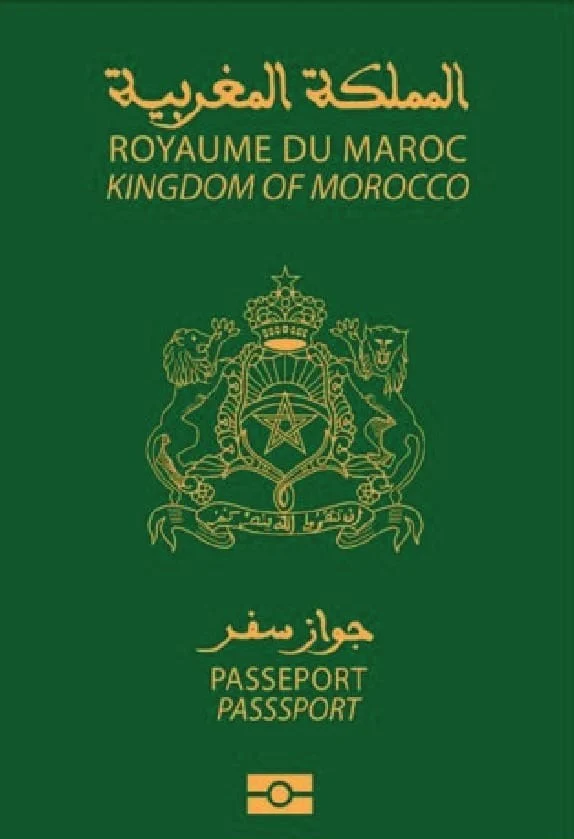 Passport
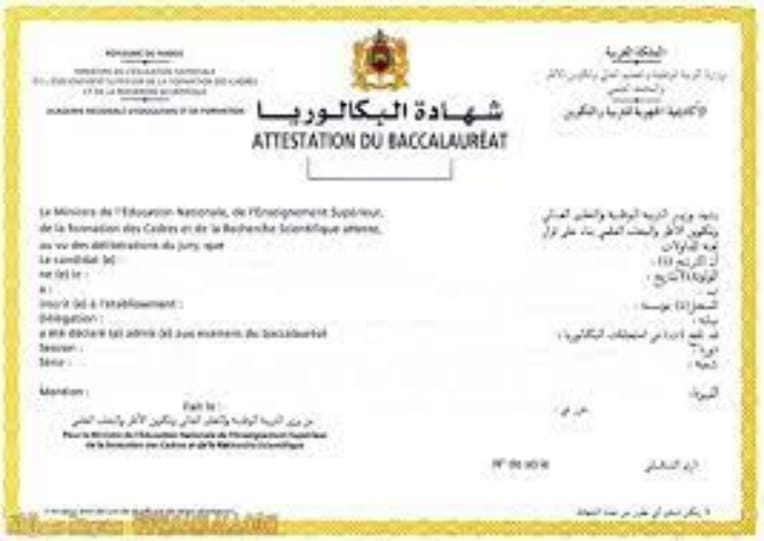 Diploma
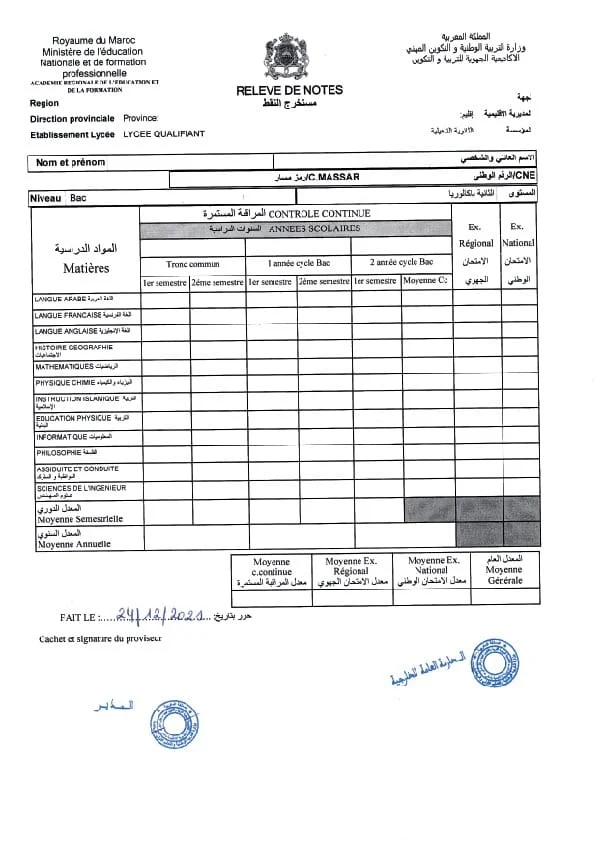 Transcripts
 Language proof
 Additional documents
01 / Identity
Start with your passport and perfectly consistent personal details
Universities commonly ask for the passport identity page. Some official guides also request a birth certificate, parents' IDs or guardian documents for minors, so do not assume the passport is the only personal document.
- Use an ordinary passport valid for the period specified by the university.
- Name, date of birth and passport number should match across forms and uploads.
- Upload a clear, uncropped identity page.
- Tell the university if your passport changes during the application.
- Applicants under 18 may face additional guardian requirements.
02 / Diplomas and transcripts
A diploma alone is not enough: prepare the complete academic record
The degree you are applying for determines which prior credentials are needed. Some universities allow final-year students to submit expected-graduation proof and current transcripts, then provide the final diploma before registration.
- Bachelor: high-school diploma and required transcripts.
- Master: bachelor's degree and complete undergraduate transcript.
- PhD: bachelor's and master's credentials may both be requested.
- Keep originals because the university may inspect them at registration.
- Avoid low-resolution scans or missing transcript pages.
03 / Translation and notarization
The language of a document matters as much as its content
For example, Xiamen University's 2026 guide says documents and forms in languages other than Chinese or English should be accompanied by notarized Chinese or English translations. This matters for Moroccan documents that may be issued in Arabic or French.
- Check which document languages your target university accepts.
- If it asks for Chinese or English, do not assume French is sufficient.
- Some degrees may need additional notarization or certification, especially for graduate study.
- Keep names, program titles and dates consistent in translations.
- Retain the original together with any required certified translation.
04 / Language and CSCA
Language proof and entrance tests depend on the program
Chinese-taught programs may require HSK; English-taught programs may require IELTS, TOEFL or another accepted proof. CSCA now appears in some bachelor admission routes, so verify the current program page.
- Check certificate validity when the university specifies an expiry period.
- Some universities accept proof that prior education was taught in the target language, but this is not universal.
- Do not assume CSCA is required for every applicant.
- Keep a clear score report and verification information where available.
05 / Master's and PhD
Graduate applications need a deeper file than diplomas alone
Master's and doctoral guides frequently require recommendation letters, a personal statement and a study or research plan. Xiamen University's 2026 master's guide, for example, requests two recommendations and a personal statement.
Academic recommendation letters
Personal statement / motivation
Study or research plan
CV where requested
Publications or academic work where relevant
Pre-admission supervisor letter if required by the program
06 / Medical and police-clearance documents
Do not obtain short-validity documents too early
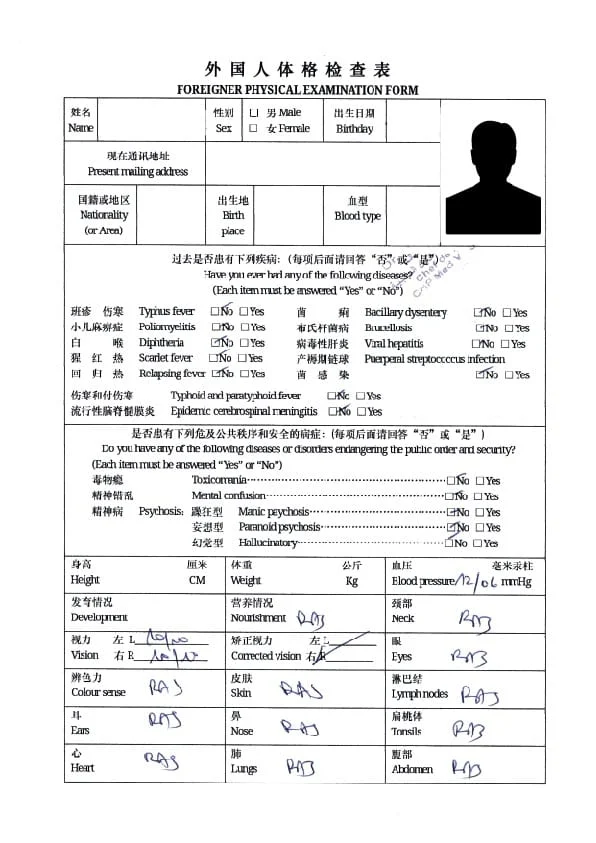
Some universities require the Foreigner Physical Examination Form and related reports, and some request a certificate of no criminal record. Official guides such as Xiamen and Xiangtan show validity periods around six months for certain documents, making timing important.
- Use the university's required medical form when one is specified.
- Check stamps, signatures, photo and required test items.
- Confirm validity periods before obtaining the documents.
- Police-clearance requirements vary by university and scholarship.
- Do not reuse an old document without checking whether it is still valid.
07 / Scholarships and financial guarantee
A scholarship file may require more than a standard admission file
Scholarships can add dedicated forms, study plans, recommendations, medical documents or financial evidence. Some universities may also request a separate financial-guarantee form.
Required scholarship formStudy or research planRecommendations based on degree levelMedical examination where requiredFinancial proof or guarantee where requestedExtra documents required by the scholarship or nominating authority
08 / When should you start?
Separate long-lasting documents from short-validity documents
Start early with passport, diplomas, transcripts and core translations. Schedule documents that expire quickly closer to the application window so they remain valid when submitted.
Now: passport, diplomas, transcripts and core translations.
After choosing a program: language proof, CSCA, plans and recommendations as required.
Near submission: medical exam and police record if their validity is limited.
Before submission: verify names, numbers, dates and every uploaded page.
After submission: keep a complete copy of the exact file you sent.
Common mistakes
Small errors can make an application incomplete
A strong file is not about uploading many unnecessary documents; every required document should be correct, readable, valid and consistent with the application form.
Different name spelling between passport and translation
Incomplete transcript
Translation not accepted by the university
Wrong language certificate
Medical form missing stamp or signature
Obtaining a short-validity document too early
Blurry or rotated uploads
Submitting before a final checklist review
How ECAP helps
We check documents against the university and program, not only a generic list
Once realistic options are selected, we map each university to its actual checklist and help identify what to prepare, translate and delay so short-validity documents do not expire unnecessarily.
✓ University-specific checklist
✓ Completeness review
✓ Translation/notarization alerts
✓ Document timing plan
✓ Scholarship requirement review
✓ Follow-up on additional university requests
Frequently asked questions
What Moroccan students ask about China application documents
Direct answers separating common documents from university-specific requirements.
What are the main documents required to study in China?
Applications often start with a passport, diploma, transcripts and language proof where required. CSCA, study plans, recommendations, medical exams or police-clearance certificates may be added depending on the university, level and scholarship.
Do Moroccan documents need translation?
It depends on the document language and university rules. Xiamen University, for example, requires notarized Chinese or English translations for documents in other languages.
Are French documents always accepted?
No. If a university specifies Chinese or English, French documents may need certified translation according to its rules.
Can I apply before receiving my final diploma?
Some universities allow expected-graduation proof and current transcripts, then require the final diploma before registration.
Do bachelor applicants need a recommendation letter?
Not everywhere. Some universities request one even for bachelor applications, while recommendations are more common for master's and PhD applications.
How many recommendations are needed for master's or PhD?
It varies. Xiamen University's 2026 master's and doctoral guides request two recommendation letters.
Is the medical examination always required?
Not necessarily in the same format or at the same stage. Check the current university guide.
Is a police-clearance certificate required?
Some universities, programs or scholarships request it, but it is not a universal China-wide requirement.
Is CSCA part of the application file?
It may be required in certain bachelor routes. Xiamen University lists a CSCA score report in its 2026 undergraduate documents.
When should I start preparing documents?
Start early with passport, diplomas, transcripts and translations, then time short-validity documents closer to the application window.
Official references
Always verify the guide for your target university
We use official references to show how an application file is structured, but the final authority is the program guide for the year you apply.
Next step
Share your level and target major so we can build the right checklist
ECAP can first identify realistic university options, then define the documents actually required instead of asking you to prepare a generic file.
ECAP · Study in China
Start with a quick eligibility assessment
This short form helps our team understand your academic profile, preferred major and budget before we advise you on the right China university options.
Please watch the ECAP introduction before completing the form.
Contact1 / 4
Your answers stay on this page only. Reloading or leaving this page may clear them.