
Varies by degree, major, teaching language and university.
ECAP Guide · 2027 Budget
Cost of Studying in China for Moroccan Students: Tuition, Housing & Living
A practical guide to tuition, accommodation, food, insurance and other costs, using official examples published by Chinese universities instead of one unrealistic national price.
Last reviewed: October 2026 · The 2026 figures below are official examples for planning 2027 and should be reconfirmed when the new admission guides are published.

There is no single price for studying in ChinaUniversity, major, teaching language, city, housing and scholarships can change the budget substantially.
¥
Quick answer
Budget for the full year, not tuition alone
A student budget usually includes tuition, housing, food, insurance, transport, travel and application costs. Scholarships may cover some or most of these items, but coverage differs by scheme.
01 / Budget
What makes up the cost of one academic year in China?
Compare options line by line. Do not compare two universities using tuition alone.
University dorm or off-campus housing, with major differences by city and campus.
Meals, phone, supplies and everyday spending.
Some universities publish a specific annual insurance fee for international students.
University application fees, translation or medical checks depending on the case.
Flights from Morocco, local transport and necessary intercity travel.
02 / Tuition
The program can change the price more than students expect
A standard Chinese-taught program may cost less than an international or specialized program. Compare the official program page, not only the university name.
- Bachelor’s, master’s and PhD programs use different fee schedules.
- English-taught programs can have different tuition from Chinese-taught programs.
- Medicine, arts and international or joint programs can cost considerably more.
- Application fees are usually separate from tuition.
- Always check the current admission guide rather than an old number.

03 / Housing
Housing can change the budget almost as much as tuition
Dorm prices depend on room type and campus. Availability may be limited, so students should understand the off-campus backup plan before traveling.
Double or single roomCampus locationWater, electricity and InternetAvailability for self-funded studentsOff-campus housing if a dorm is unavailableDeposits or additional charges where applicable

04 / Living costs
Food, insurance and transport are recurring costs, not small extras
These expenses continue throughout the year. Include them before choosing a university so the budget is not built around tuition only.
Food
Medical insurance
Local transport
Phone and Internet
Study materials
Medical examination if required
Residence-related procedures where applicable
Flights and an emergency buffer

05 / Official 2026 examples
Published university examples, not national averages
These figures show how costs can differ by university, city and program. 2027 amounts should be reconfirmed when new admission guides are released.
Xiamen University · official example
Its official cost page lists about RMB 24,000–26,000 per year for several common Chinese-taught bachelor’s programs and RMB 38,000 for English-taught MBBS. It also lists food at about RMB 1,000–1,500/month, insurance at RMB 800/year and an application fee of RMB 400. Accommodation varies widely by campus and room type.
Xiamen University · official costs page ↗Shanghai Jiao Tong University · official example
Its 2026 Chinese-taught undergraduate guide lists RMB 24,800/year for the general program, RMB 800 application fee and RMB 800/year insurance. Its housing page publishes examples such as RMB 6,600–12,600 per semester depending on room type and campus.
These numbers illustrate how to compare costs. They are not a national price or a guarantee; specialized programs can be much more expensive and some universities or cities can cost less.
06 / Scholarships
A scholarship can transform the budget, but read the coverage line by line
Scholarship does not automatically mean zero cost. Some schemes cover tuition, housing, insurance and a monthly stipend; others cover only tuition or part of it.
Full or partial tuition waiverDormitory or housing allowanceMedical insuranceLiving stipendFunding duration and renewal rulesCosts left to the student

07 / Planning from Morocco
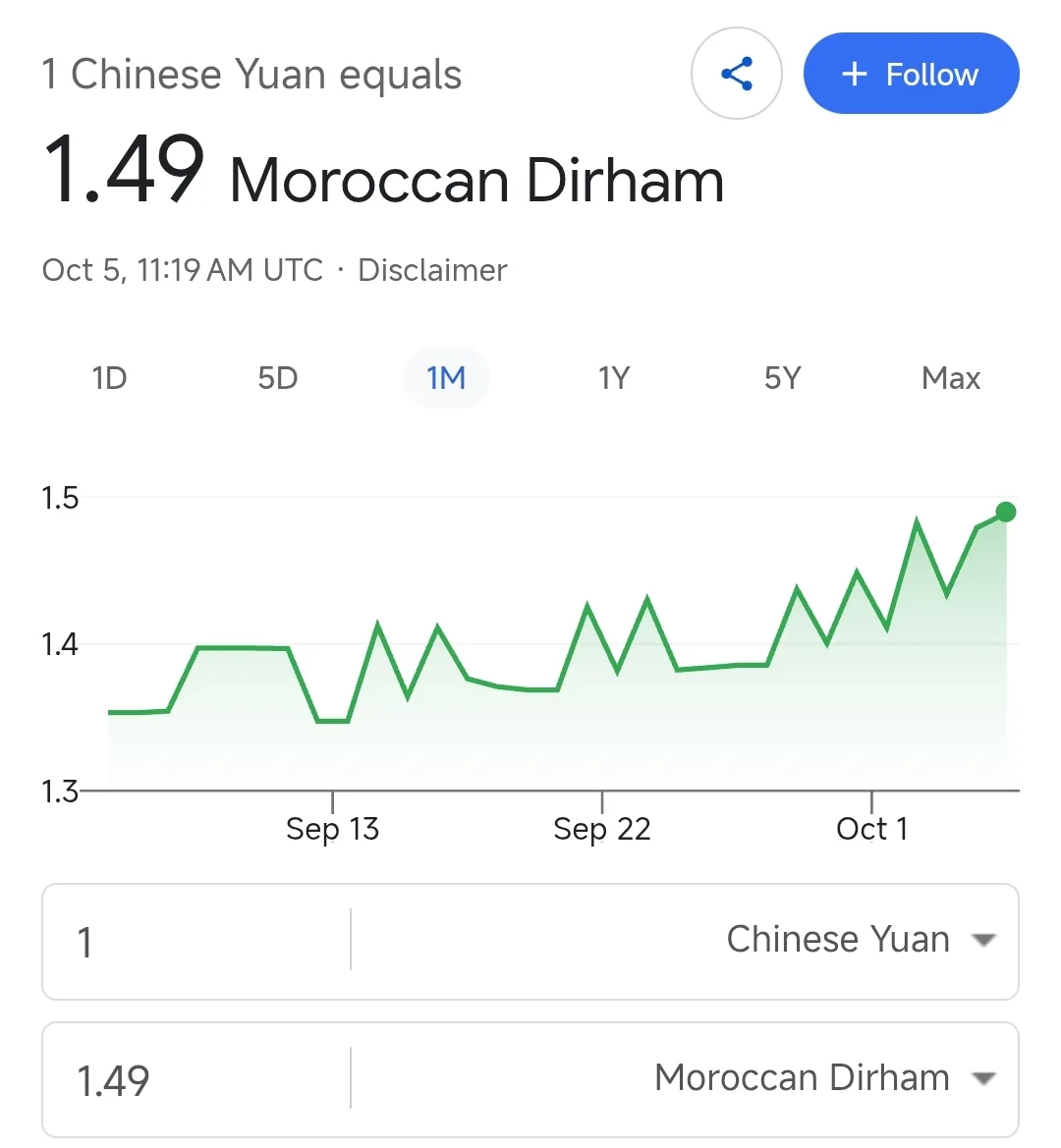
Plan in RMB first, then convert to Moroccan dirhams
Exchange rates move. Keep the official RMB amounts as your base and convert to MAD when planning payments, with a buffer for currency movements, travel and unexpected costs.
- Keep official RMB fees as the primary reference.
- Separate university fees, ECAP fees and any third-party charges.
- Verify payment method and deadline with the university.
- Add the Morocco–China flight budget.
- Keep a reserve for the first weeks after arrival.
- Do not pay based on an unofficial message or personal account.
08 / Reducing cost
Reduce cost without choosing a weak university only because it is cheap
The goal is the best balance of program quality, realistic admission, city, housing, scholarship and budget.
Compare several realistic universities for the same major.
Check university housing before planning off-campus rent.
Apply to scholarships that genuinely fit your profile.
Compare total cost rather than tuition only.
Start early to avoid expensive last-minute housing and travel decisions.
Choose the city together with the program and budget.
How ECAP helps
We compare admission, scholarships and cost as one decision
We start with the student’s profile, major and budget, then compare realistic university options and separate known fees from items that still need official confirmation.
✓ Program + tuition comparison
✓ Scholarship review
✓ Housing and living-cost planning
✓ Separate university charges
✓ Pre-departure budget plan
✓ No ECAP service fee before admission

Frequently asked questions
What Moroccan students ask about the cost of studying in China
Direct answers that separate published examples from costs that depend on the university and program.
How much does it cost for a Moroccan student to study in China?
There is no single amount. Cost depends on university, major, teaching language, city, housing and scholarship. Build one budget containing tuition, housing, daily living, insurance and travel.
How much is tuition in China?
It varies widely. As one official example, Xiamen University lists roughly RMB 24,000–26,000/year for several common Chinese-taught bachelor’s programs, while some specialized programs are much more expensive.
Is university housing always cheap?
No. Price depends on city, campus and room type, and availability can be limited. Always review the university’s official accommodation page.
How much should I budget for food?
Habits and cities differ. Xiamen University publishes an example of about RMB 1,000–1,500/month for meals, but this is not a national average.
Is medical insurance required?
Rules follow the applicable requirements and university process. Xiamen University and Shanghai Jiao Tong University currently list RMB 800/year in the relevant guidance.
Does a scholarship cover every expense?
Not necessarily. Check tuition, housing, insurance, stipend and any costs that remain your responsibility.
Is Shanghai always more expensive?
Housing and everyday expenses vary by city and accommodation type. Compare the official housing rates of your target university with alternatives rather than relying on one generic estimate.
Should I calculate my budget in Moroccan dirhams?
For planning, keep the official RMB amounts first and convert to MAD when preparing payment because exchange rates change.
Are there costs beyond tuition?
Yes. Application, insurance, housing, documents, medical checks, travel, transport and other expenses may apply.
When do I pay ECAP?
ECAP does not charge its service fee before admission. Any independent university fee is explained separately.
Official sources
Confirm costs with the university before making a decision
Fees change. We use official admission and accommodation pages as references and present their figures here as planning examples, not a fixed price list.
Next step
Share your profile and budget so we can compare realistic options
Tell ECAP your current education, target major and approximate budget so we can compare relevant universities instead of starting from a generic national estimate.
ECAP · Study in China
Start with a quick eligibility assessment
This short form helps our team understand your academic profile, preferred major and budget before we advise you on the right China university options.
Please watch the ECAP introduction before completing the form.
Contact1 / 4
Your answers stay on this page only. Reloading or leaving this page may clear them.